

Summary
Cough is a common clinical manifestation of respiratory tract disorders and significantly affects quality of life across all age groups. Herbal cough syrups have been traditionally used for symptomatic relief and are increasingly incorporated into contemporary formulations due to their multi-component therapeutic potential. This review critically evaluates medicinal plants used in herbal cough syrups, their phytochemical constituents, formulation approaches, mechanisms of action, and recent advances reported in the literature. Published peer- reviewed studies were analyzed to clearly distinguish traditional use, preclinical pharmacological evidence, and available clinical validation. Several medicinal plants demonstrate antitussive, expectorant, anti-inflammatory, and antimicrobial activities in experimental studies; however, clinical evidence in human populations remains limited, inconsistent, and formulation-dependent. Variability in phytochemical composition, lack of standardization, potential herb–drug interactions, and limited comparative studies with conventional antitussive agents present important challenges for clinical translation. Recent developments, including standardized extracts, sugar-free formulations, and novel delivery approaches reflect progress in formulation science but require stronger clinical support. Overall, this review highlights both the therapeutic potential and existing limitations of herbal cough syrups, emphasizing the need for rigorous clinical studies, quality control, and regulatory harmonization to support their rational and evidence-based use in cough management.
Keywords
Herbal cough syrup; Medicinal plants; Phytochemical constituents; Formulation approaches; Antitussive activity; Clinical evidence
Introduction
Cough is a common clinical symptom associated with a wide range of upper and lower respiratory tract disorders, including infections, allergic conditions, and chronic inflammatory diseases (1). Although acute cough is generally self-limiting, persistent or recurrent cough can significantly impair quality of life by disturbing sleep, daily activities, and overall well-being (2). Due to its high prevalence across all age groups, cough remains one of the most frequent reasons for outpatient visits and self-medication worldwide (3).
Conventional management of cough primarily involves synthetic antitussive and expectorant agents, including opioid and non-opioid formulations. While these agents are effective in specific clinical situations, their use is often limited by adverse effects, variable efficacy, and safety concerns, particularly in pediatric and geriatric populations (4). Sedation, gastrointestinal discomfort, and the risk of misuse have encouraged interest in alternative and complementary therapeutic approaches for cough management (5).
Herbal cough syrups have been traditionally used in systems of medicine such as Ayurveda, Unani, and other traditional practices for the symptomatic relief of cough and related respiratory conditions (6). These formulations commonly contain medicinal plants with reported antitussive, expectorant, anti-inflammatory, antimicrobial, and demulcent properties. Unlike single-target synthetic drugs, herbal cough syrups are believed to exert their effects through multiple bioactive constituents acting on different pathways involved in cough generation and airway irritation (7).
Despite their widespread use and general perception of better tolerability, the scientific validation of herbal cough syrups presents several challenges. Although numerous preclinical studies support the pharmacological activities of medicinal plants used in these formulations, clinical evidence from well-designed human trials remains limited and inconsistent (8). Variability in phytochemical composition, differences in extraction methods, lack of formulation standardization, and quality control issues further complicate the assessment of efficacy and safety (9). In addition, potential herb–drug interactions and regulatory gaps warrant careful consideration (10).
Therefore, the present review aims to provide a comprehensive and critical evaluation of herbal cough syrups by examining medicinal plants used, their phytochemical constituents, formulation approaches, mechanisms of action, evaluation parameters, safety considerations, regulatory aspects, and recent advances. By clearly distinguishing traditional use, preclinical evidence, and clinical validation, this review seeks to identify existing gaps and future directions to support the rational and evidence-based use of herbal cough syrups in cough management.
Pathophysiology of Cough
Cough is a protective reflex mechanism designed to clear the airways of irritants, secretions, and foreign particles. It involves a
complex interaction between sensory receptors, neural pathways, and respiratory muscles. Depending on duration and underlying cause,
cough may be classified as acute, subacute, or chronic, each associated with distinct pathophysiological mechanisms (16). The cough
reflex is initiated by the stimulation of specialized sensory receptors located in the respiratory tract, including the larynx,
trachea, bronchi, and, to a lesser extent, the external auditory canal and esophagus. These receptors include rapidly adapting
receptors (RARs), slowly adapting stretch receptors (SARs), and C-fiber nociceptors, which respond to mechanical, chemical, and
inflammatory stimuli such as mucus, smoke, allergens, and infectious agents (17). Upon activation, afferent signals are transmitted
primarily via the vagus nerve to the cough center located in the medulla oblongata of the brainstem. This central processing
integrates sensory input and generates an appropriate motor response. The efferent pathway then transmits signals through motor
nerves to the diaphragm, intercostal muscles, abdominal muscles, and larynx, resulting in the characteristic cough sequence consisting
of inspiratory, compressive, and expulsive phases (18).
Additionally, excessive mucus production and impaired mucociliary clearance contribute to persistent cough by increasing mechanical stimulation of airway receptors. Oxidative stress and epithelial damage further exacerbate receptor sensitivity, leading to prolonged or recurrent cough episodes (20). Understanding these pathophysiological mechanisms is essential for the rational selection of therapeutic agents, including herbal cough syrups, which aim to modulate inflammation, reduce mucus viscosity, and soothe irritated respiratory mucosa.
Cough Reflex Arc
The cough reflex arc is a coordinated neural pathway responsible for initiating and controlling the cough response. It plays a vital
role in maintaining airway patency by facilitating the removal of mucus, pathogens, and foreign particles from the respiratory
tract. Dysregulation of this reflex is commonly associated with chronic and hypersensitive cough conditions (21).
Afferent Pathway
The afferent limb of the cough reflex begins with the activation of sensory receptors located in the upper and lower respiratory
tract, including the larynx, trachea, and bronchi. These receptors are sensitive to mechanical stimuli such as mucus accumulation
and foreign particles, as well as chemical stimuli including inflammatory mediators, pollutants, and infectious agents. Sensory
impulses generated at these sites are transmitted primarily via the vagus nerve to the central nervous system (22).
Efferent Pathway
The efferent limb of the cough reflex involves motor nerve signals transmitted from the cough center to the respiratory muscles,
including the diaphragm, intercostal muscles, abdominal muscles, and laryngeal muscles. This coordinated motor output produces the
characteristic phases of coughing: deep inspiration, closure of the glottis with increased intrathoracic pressure, followed by
forceful expiration that expels air and airway secretions (24).
Central Processing
The sensory signals from the afferent pathway are integrated in the cough center situated in the medulla oblongata of the brainstem.
This center processes incoming stimuli and determines the initiation, intensity, and frequency of the cough response. Higher
cortical centers may also modulate the cough reflex, allowing voluntary suppression or initiation of coughing under certain
conditions (23).
Clinical Relevance
In respiratory diseases such as infections, asthma, and chronic inflammatory airway disorders, heightened sensitivity of the cough
reflex arc may occur. Inflammatory mediators and epithelial damage lower the activation threshold of sensory receptors, resulting
in excessive or persistent coughing. Understanding the cough reflex arc provides a physiological basis for therapeutic
interventions aimed at suppressing excessive reflex activity and protecting airway mucosa (25).
Rationale for Herbal Cough Syrup
The increasing interest in herbal cough syrups is driven by the limitations associated with conventional synthetic antitussive
therapies and the long-standing traditional use of medicinal plants in respiratory disorders. Synthetic cough suppressants and expectorants, although effective in certain clinical conditions, are often associated with adverse effects such as sedation, gastrointestinal discomfort, and limited suitability for pediatric and geriatric populations. Moreover, concerns related to misuse, inappropriate self-medication, and variable clinical outcomes have highlighted the need for safer and more holistic alternatives (26).
Herbal cough syrups have been traditionally used in systems of medicine such as Ayurveda, Unani, and traditional folk practices for centuries. These formulations typically contain a combination of medicinal plants possessing antitussive, expectorant, mucolytic, anti-inflammatory, antimicrobial, and demulcent properties. Unlike single-molecule synthetic drugs, herbal cough syrups exert multi-target effects by modulating different components of the cough pathway, including airway inflammation, mucus viscosity, and cough receptor sensitivity (27).
Another important rationale for the use of herbal cough syrups lies in their potential to provide symptomatic relief while addressing underlying airway irritation. Several plant-derived constituents, such as flavonoids, saponins, alkaloids, and polysaccharides, are known to soothe inflamed mucosal surfaces and support mucociliary clearance. This multimodal action may be particularly beneficial in cases of mild to moderate cough associated with upper respiratory tract infections and allergic conditions (28).
Despite their widespread acceptance and perception of better tolerability, herbal cough syrups are not devoid of challenges. Variability in phytochemical composition due to differences in plant species, geographical sources, harvesting conditions, and extraction methods can significantly influence therapeutic outcomes. Additionally, limited standardization, inconsistent clinical validation, and potential herb–drug interactions necessitate a cautious and evidence-based approach to their use (29).
Therefore, a critical evaluation of herbal cough syrups is essential to distinguish traditional claims from scientifically supported evidence. Understanding their pharmacological basis, formulation strategies, safety considerations, and regulatory aspects is crucial for promoting rational use and integrating herbal cough syrups into modern evidence-based respiratory care (30).

(Author-generated schematic illustration based on published literature.Source: Dicpinigaitis PV, Chest, 2020; Chang AB et al., Chest, 2021.)
Medicinal Plants Used in Herbal Cough Syrups
Herbal cough syrups are formulated using a combination of medicinal plants selected for their traditional use and reported pharmacological
activities relevant to cough management. These plants act through multiple mechanisms such as suppression of cough reflex sensitivity,
facilitation of mucus expulsion, reduction of airway inflammation, and soothing of irritated respiratory mucosa. However, the extent
of scientific validation differs among individual ingredients, necessitating a critical evaluation of available evidence.
Adhatoda vasica (Vasaka)
A. vasica is a key ingredient in many herbal cough syrups due to its expectorant and bronchodilatory properties. Alkaloids such as
vasicine and vasicinone are known to enhance bronchial secretions and improve mucus clearance. Although extensively used in
traditional medicine, clinical evidence supporting its antitussive efficacy remains limited and formulation-specific (31).
Glycyrrhiza glabra (Liquorice)
G. glabra is widely incorporated for its demulcent and anti-inflammatory effects. Glycyrrhizin and flavonoids help soothe inflamed
mucosal surfaces and may reduce irritation-induced cough. Despite its long history of use, concerns
regarding dose-dependent adverse effects highlight the need for standardized formulations and clinical evaluation (32).
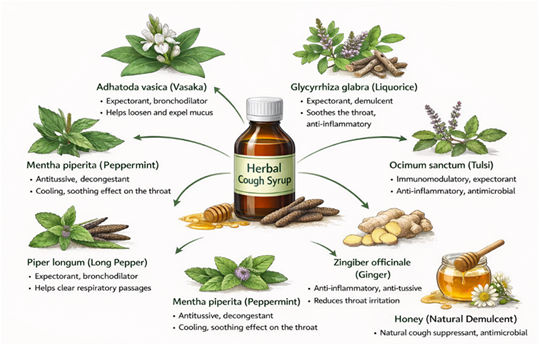
(Author-generated conceptual illustration summarizing commonly reported medicinal plants. Source: WHO, 2020; Barnes J et al., Phytotherapy Research, 2021; ESCOP, 2020.)
Ocimum sanctum (Tulsi)
O. sanctum exhibits antimicrobial, anti-inflammatory, and immunomodulatory properties. Traditionally used in respiratory infections,
it may help reduce airway inflammation associated with cough. Most supporting evidence is derived from experimental and traditional
sources, with limited data from controlled human studies (33).
Zingiber officinale (Ginger)
Z. officinale is used in herbal cough syrups for its anti-inflammatory and antioxidant activities. Active constituents such as gingerols
and shogaols are believed to relieve throat irritation and suppress cough associated with upper respiratory tract infections.
Scientific evidence is largely preclinical, emphasizing the need for clinical validation (34).
Piper longum (Long Pepper)
P. longum is traditionally used as an expectorant and bioavailability enhancer. Piperine present in long pepper may improve respiratory
function and enhance the absorption of other herbal constituents in polyherbal formulations. However, its direct antitussive effects
in humans are not well established (35).
Mentha piperita (Peppermint)
M. piperita contains menthol, which produces a cooling sensation and provides symptomatic relief in cough by soothing irritated throat
tissues. It may also exert mild bronchodilatory effects. Its use is primarily supportive, with limited clinical data specific to cough
suppression (36).
Honey (Natural Demulcent)
Honey is frequently used as a natural demulcent in herbal cough syrups. It forms a protective coating over the pharyngeal mucosa,
reducing irritation and cough frequency. Several clinical studies have suggested its benefit in reducing nocturnal cough, particularly
in children, although variability in composition affects outcomes (37).
Phytochemical Constituents and Their Role
Alkaloids such as vasicine exhibit bronchodilatory and expectorant properties by relaxing smooth bronchial muscles and enhancing mucus
clearance. Flavonoids and phenolic compounds reduce airway inflammation by inhibiting inflammatory mediators and oxidative stress,
thereby decreasing cough reflex sensitivity. Saponins play a crucial role in enhancing bronchial secretions and facilitating
expectoration, making them particularly useful in productive cough [7,8,12]
Tannins and mucilaginous compounds exert a soothing effect on irritated mucosal surfaces, reducing mechanical stimulation of cough receptors. Essential oils and terpenoids provide antimicrobial and mild anesthetic effects, which help in alleviating cough associated with upper respiratory tract infections. The synergistic interaction among these phytochemicals contributes to the overall efficacy of herbal cough syrups [5].
Herbal cough syrups exhibit their therapeutic activity due to the presence of diverse phytochemical constituents that act on different components of the respiratory system. These bioactive compounds contribute to antitussive, expectorant, anti-inflammatory, antimicrobial, and soothing effects, making herbal formulations useful in the management of cough and related respiratory disorders (1).
Phytochemical Constituents and Their Therapeutic Role in Herbal Cough Syrups
| Phytochemical class | Examples | Major source plants | Therapeutic Role in cough |
|---|---|---|---|
| Alkaloids | Vasicine, Piperine | Adhatoda vasica, Piper longum | Bronchodilator, antitussive, expectorant |
| Flavonoids | Quercetin, Luteolin | Ocimum sanctum, Glycyrrhiza glabra | Anti-inflammatory, antioxidant, cough suppression |
| Saponins | Glycyrrhizin | Glycyrrhiza glabra | Demulcent, expectorant, soothing effect |
| Tannins | Catechins, Gallic acid | Adhatoda vasica, Ocimum sanctum | Astringent action, reduction of throat irritation |
| Phenolic compounds | Eugenol, Rosmarinic acid | Ocimum sanctum, Mentha piperita | Anti-inflammatory, antimicrobial |
| Terpenoids | Menthol | Mentha piperita | Mild antitussive, decongestant |
| Essential oils | Ginger oil, Peppermint oil | Zingiber officinale, Mentha piperita | Expectorant, antimicrobial, soothing |
| Sugars & polysaccharides | Mucilage | Glycyrrhiza glabra, Honey | Demulcent, protective coating on mucosa |
Spread-ability tests assess how smoothly the lipstick applies to the lips [19].
Pay-off tests measure how much product is transferred to the lips during application [20].
Smudge resistance tests check how well the lipstick stays in place when subjected to friction [18].
Longevity studies evaluate how long the colour and texture last while being worn [19].
Alkaloids
Alkaloids such as vasicine and vasicinone, primarily obtained from Adhatoda vasica, are well known for their bronchodilatory and
expectorant properties. These compounds help in loosening bronchial secretions and improving mucociliary clearance, thereby reducing
cough frequency and intensity (2).
Flavonoids
Flavonoids present in medicinal plants such as Ocimum sanctum and Zingiber officinale exhibit significant anti-inflammatory and antioxidant
activities. They reduce airway inflammation and oxidative stress, which play a key role in cough reflex hypersensitivity (3).
Saponins
Saponins, commonly found in Glycyrrhiza glabra and Hedera helix, act as natural expectorants. By decreasing the surface tension of mucus,
saponins facilitate liquefaction of bronchial secretions and promote effective expectoration in productive cough conditions (4).
Tannins
Tannins possess astringent and mild antimicrobial properties. They help soothe inflamed mucosal surfaces of the throat and upper
respiratory tract by forming a protective layer, which reduces local irritation and suppresses excessive cough reflex activity (5).
Essential Oils and Terpenoids
Essential oils and terpenoids present in herbs such as Zingiber officinale and Ocimum sanctum exhibit antimicrobial, anti-inflammatory,
and mild bronchodilatory effects. These constituents also improve patient compliance by imparting a pleasant aroma and soothing
sensation to herbal cough syrups (6)
Polysaccharides
Polysaccharides present in herbal ingredients such as honey and Glycyrrhiza glabra play a crucial role in cough management by exerting
a demulcent effect. These compounds form a protective viscous layer over the irritated mucosal surfaces of the throat and upper
respiratory tract, thereby reducing sensory nerve stimulation and cough reflex sensitivity. Polysaccharides are particularly
beneficial in the management of dry and non-productive cough by providing soothing and moisturizing effects, which help in alleviating
throat irritation and discomfort.
Mechanism of Action of Herbal Cough Syrups
Herbal cough syrups exert their therapeutic effects through multiple pharmacological pathways that collectively target the underlying
mechanisms of cough. Unlike single-target synthetic antitussives, herbal formulations act in a multimodal manner by modulating the cough
reflex, reducing airway inflammation, facilitating mucus clearance, and soothing irritated mucosal surfaces.
The combined action of diverse phytochemical constituents results in a synergistic effect, contributing to symptomatic relief in both
productive and non-productive cough conditions. The key mechanisms involved in the action of herbal cough syrups are discussed below.
Comparative Perspective: Herbal Cough Syrups vs Synthetic Antitussives
| Parameter | Herbal cough syrup | Synthetic antitussives |
|---|---|---|
| Source | Medicinal plants and natural ingredients | Chemically synthesized drugs |
| Mechanisms of action | Multimodal: antitussive, expectorant, anti-inflammatory, demulcent | Primarily central or peripheral cough suppression |
| Effect on mucus | Promote mucus liquefaction and expectoration | Limited effect on mucus clearance |
| Safety profile | Generally perceived as safer; may vary with quality and composition | Associated with adverse effects such as drowsiness and gastrointestinal discomfort |
| Clinical evidence | Predominantly traditional use and preclinical studies; limited clinical trials | Supported by controlled clinical studies and standardized dosing |
| Use in pediatrics | Commonly used with caution under supervision | Restricted use due to safety concerns and guideline limitations |
| Risk factor | Variability in phytochemical content; potential herb–drug interactions | Risk of misuse, overdose, and adverse drug reactions |
| Regulatory control | Depends on herbal standardization and GMP compliance | Strict pharmaceutical regulatory oversight |
Antitussive Action
Several medicinal plants used in herbal cough syrups modulate the cough reflex by reducing the sensitivity of airway sensory
receptors. Alkaloids such as vasicine from Adhatoda vasica and piperine from Piper longum are reported to suppress excessive cough
reflex activity by acting on peripheral cough receptors and central cough centers. This action helps in decreasing cough frequency,
particularly in chronic and irritative cough conditions (38,39).
Expectorant and Mucolytic Activity
Saponins present in plants like Glycyrrhiza glabra enhance bronchial secretions and reduce mucus viscosity, thereby facilitating easier
expectoration. Improved mucus clearance helps remove irritants and pathogens from the respiratory tract, contributing to symptomatic
relief in productive cough. Gingerols from Zingiber officinale further support mucolytic action by promoting smooth muscle relaxation
and improved airflow (40,41).
Anti-inflammatory Effects
Airway inflammation is a key contributor to persistent cough. Flavonoids and phenolic compounds present in Ocimum sanctum, Glycyrrhiza
glabra, and ginger inhibit the release of pro-inflammatory mediators such as prostaglandins, leukotrienes, and cytokines. Reduction of
inflammation leads to decreased airway hypersensitivity and irritation, thereby indirectly suppressing cough (42,43).
Demulcent and Soothing Action
Polysaccharides and natural sugars, particularly from honey and licorice, exert a demulcent effect by forming a protective coating over
the inflamed mucosal surfaces of the throat and upper respiratory tract. This protective layer reduces stimulation of sensory nerve
endings and is especially beneficial in dry and non-productive cough. The soothing effect also improves patient comfort and compliance
(44,45).
Antimicrobial and Antioxidant Effects
Essential oils from Mentha piperita and phenolic compounds from tulsi and ginger exhibit antimicrobial activity against common
respiratory pathogens. Antioxidant properties further protect airway epithelial cells from oxidative stress, which may otherwise
exacerbate inflammation and cough severity (46,47).
Overall Synergistic Effect
The combined presence of antitussive, expectorant, anti-inflammatory, demulcent, and antimicrobial activities results in a holistic
approach to cough management. However, the extent of therapeutic benefit depends on formulation composition, phytochemical concentration,
and quality of manufacturing. Variability in these factors may lead to differences in clinical efficacy among herbal cough syrup
formulations, highlighting the importance of standardization and quality control (48).
Difference in Therapeutic Approach
Synthetic non-opioid antitussives such as dextromethorphan primarily act by suppressing the cough reflex at the central or peripheral
level, providing short-term symptomatic relief. In contrast, herbal cough syrups exhibit a multimodal therapeutic approach by combining
antitussive, expectorant, anti-inflammatory, and demulcent actions, thereby addressing multiple components of cough pathophysiology
rather than reflex suppression alone (49,50).
Effect on Airway Inflammation and Mucus Clearance
Synthetic antitussives have limited influence on airway inflammation and mucus viscosity. Herbal cough syrups, however, promote mucus
liquefaction and expectoration through saponins and alkaloids, while flavonoids and phenolic compounds help reduce airway inflammation.
This dual action may contribute to symptomatic relief in productive cough conditions (51,52).
Clinical Evidence and Validation
The clinical efficacy of synthetic antitussives is supported by controlled clinical trials and standardized dosing regimens. In contrast,
most herbal cough syrups rely on traditional use and preclinical evidence, with limited high-quality human clinical trials available.
Variability in formulation composition further contributes to inconsistent clinical outcomes among herbal products (53).
Safety Considerations and Pediatric Use
Synthetic antitussives are associated with adverse effects such as drowsiness, gastrointestinal discomfort, and restricted pediatric
use. Although herbal cough syrups are often perceived as safer, potential risks related to herb–drug interactions, variable
phytochemical content, and poor manufacturing practices must be considered. Evidence-based pediatric cough guidelines recommend cautious
use of both herbal and synthetic formulations (51).
Regulatory and Quality Control Aspects
Synthetic antitussives are subject to strict pharmaceutical regulatory frameworks, whereas herbal cough syrups fall under varying
regulatory standards depending on regional guidelines. Lack of uniform standardization and quality control remains a key challenge
for herbal formulations, emphasizing the need for Good Manufacturing Practices (GMP) and phytochemical standardization (48).
Formulation Approaches Reported in Literature
The formulation of herbal cough syrups involves careful selection of medicinal plant extracts, suitable solvents, syrup bases, and
excipients to ensure therapeutic efficacy, stability, palatability, and patient compliance. Literature reports emphasize that herbal
cough syrups should be formulated in a manner that preserves the bioactive constituents of medicinal plants while meeting
pharmaceutical quality standards. The formulation approach generally depends on the nature of the herbal ingredients, intended
therapeutic effect, and target patient population [14].
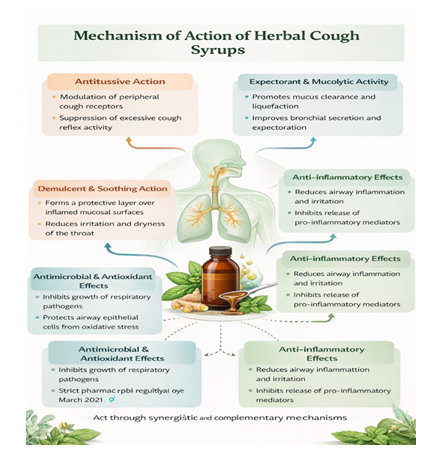
(Author-generated diagram illustrating antitussive, expectorant, anti-inflammatory, and demulcent mechanisms. Source: Heinrich M et al., 2020; Mukherjee PK, 2020.)
Selection and Preparation of Herbal Extracts
The first step in the formulation of herbal cough syrups is the selection of appropriate medicinal plants based on their traditional
use and documented pharmacological activities. Aqueous or hydroalcoholic extracts are commonly employed, as they are effective in
extracting polar and moderately polar phytoconstituents such as alkaloids, flavonoids, and saponins. Literature suggests that mild
extraction conditions should be used to avoid degradation of thermolabile constituents and to retain the therapeutic potential of
herbal extracts [12,14].
Choice of Syrup Base
The syrup base plays a crucial role in the formulation of herbal cough syrups by providing viscosity, sweetness, and a soothing effect
on the throat. Commonly used bases include sucrose syrup, glycerin, honey, or sugar-free alternatives such as sorbitol for diabetic
patients. Honey and glycerin are particularly valued for their demulcent properties, which enhance the soothing effect of the
formulation and improve patient acceptability [2,14].
Incorporation of Herbal Extracts
Once the extracts are prepared, they are incorporated into the syrup base under controlled conditions to ensure uniform distribution.
Literature emphasizes the importance of gradual mixing and proper agitation to avoid precipitation or instability. Polyherbal
formulations often require compatibility studies to ensure that the combined extracts do not interact adversely with each other or
with the excipients used in the formulation [5].

Use of Excipients and Additives
Herbal cough syrups may contain preservatives, flavoring agents, and stabilizers to enhance shelf life, taste, and overall quality.
Preservatives such as sodium benzoate or potassium sorbate are commonly reported in literature to prevent microbial growth,
particularly in aqueous formulations. Flavoring agents derived from natural sources improve palatability, especially for pediatric
use, while stabilizers help maintain formulation consistency during storage [14,15].
9.5 Standardization and Quality Considerations Standardization of herbal cough syrups is a critical aspect highlighted in literature. This involves ensuring consistent levels of marker compounds in each batch to maintain therapeutic efficacy. Analytical techniques such as spectrophotometry, chromatography, and phytochemical screening are commonly employed for quality assessment. Literature also stresses adherence to good manufacturing practices (GMP) to minimize variability in herbal formulations [15].
Recent Trends in Formulation Approaches
Recent literature reports advancements in formulation approaches, including the development of sugar-free and alcohol-free herbal
cough syrups to cater to specific patient groups. Improved extraction techniques and incorporation of bioavailability enhancers have
also been explored to enhance the effectiveness of herbal formulations. These trends reflect ongoing efforts to align traditional
herbal formulations with modern pharmaceutical standards [17].
Evaluation Parameters of Herbal Cough Syrups
Evaluation of herbal cough syrups is an essential step to ensure their quality, safety, stability, and therapeutic effectiveness.
Literature reports emphasize that herbal formulations should be evaluated using suitable physicochemical, microbiological, and
stability parameters in accordance with pharmacopeial and regulatory guidelines. Proper evaluation helps in maintaining batch-to-batch
consistency and consumer acceptability of herbal cough syrups [14,15].
Organoleptic Properties
Organoleptic evaluation involves assessing the color, taste, odor, and overall appearance of the herbal cough syrup. This is an
important quality control parameter because it directly affects patient acceptability and compliance, especially in formulations
intended for children or elderly patients. A uniform appearance and consistent taste also indicate proper formulation techniques
and homogeneity of ingredients.
pH
The pH of the syrup is measured using a digital pH meter. Maintaining an appropriate pH is critical for chemical stability, as extreme
pH values can degrade active herbal constituents or affect the syrup’s shelf life. Proper pH also helps in reducing throat irritation
and ensures that the formulation remains safe for regular consumption.
Viscosity
Viscosity determines the thickness and flow of the syrup and is measured using a viscometer. It plays a significant role in mouthfeel,
pourability, and patient acceptability. Additionally, in herbal syrups, viscosity contributes to the demulcent effect, providing a
soothing coating to the throat, which is particularly important in cough relief formulations.
Specific Gravity
Specific gravity is the ratio of the weight of the syrup to that of an equal volume of water. It provides information about the
concentration of solids in the syrup and helps in assessing consistency and uniformity of the formulation. A consistent specific
gravity indicates accurate formulation and quality control during manufacturing.
Refractive Index:
The refractive index, measured using a refractometer, reflects the sugar content and purity of the syrup. It is an indirect measure
of total dissolved solids, which affects the taste, preservation, and stability of the syrup. Correct sugar concentration also
prevents microbial growth while maintaining palatability.
Content Uniformity
Content uniformity involves estimating the amount of active herbal constituents in the syrup to ensure that each dose delivers a
consistent therapeutic effect. Uniform distribution of herbal actives is critical for efficacy and safety, as variations in
concentration can lead to under-dosing or overdosing.
Microbial Load
Microbial evaluation determines the total bacterial and fungal count in the syrup. This ensures the formulation is free from harmful
microorganisms, which is essential for patient safety. Contamination can compromise both the safety and shelf life of the herbal
syrup.
Stability Studies
Stability testing is performed by exposing the syrup to different temperature and environmental conditions over a specified period.
This evaluation helps determine the shelf life, storage conditions, and long-term integrity of the herbal formulation. Stability
studies also monitor any changes in color, taste, consistency, or active constituent levels, ensuring the product remains safe and
effective throughout its intended shelf life.
Quality Control and Regulatory Aspects of Herbal Cough Syrups
Quality control and regulatory compliance are critical components in the development and commercialization of herbal cough syrups.
Although herbal formulations are derived from natural sources, their safety, efficacy, and quality must be ensured through
scientifically validated procedures. Variability in raw materials, differences in cultivation conditions, and complex phytochemical
composition pose significant challenges in maintaining consistent quality of herbal cough syrups. Therefore, robust quality control
measures and regulatory oversight are essential to ensure the reliability and therapeutic effectiveness of these formulations [15].
Quality Control of Herbal Cough Syrups
Quality control of herbal cough syrups begins with the proper identification and authentication of medicinal plant materials.
Botanical verification using macroscopic and microscopic evaluation helps prevent adulteration and substitution of raw materials.
Literature emphasizes the importance of sourcing plant materials from reliable suppliers and ensuring proper documentation of their
origin and quality [12].
Standardization of herbal extracts is another crucial aspect of quality control. This involves the quantification of marker compounds
or characteristic phytoconstituents to ensure batch-to-batch consistency. Analytical techniques such as chromatographic and
spectrophotometric methods are commonly reported for this purpose. Standardization helps in maintaining consistent therapeutic
efficacy and minimizing variability among different batches of herbal cough syrups [15].
Physicochemical evaluation, including assessment of pH, viscosity, specific gravity, and refractive index, is routinely performed to
ensure formulation stability and uniformity. Microbiological quality testing is equally important, as herbal syrups are susceptible
to microbial contamination due to their aqueous nature. Compliance with acceptable microbial limits is essential to ensure patient
safety [15].
Regulatory Aspects of Herbal Cough Syrups
Regulatory frameworks governing herbal medicinal products vary across countries but generally aim to ensure product safety, quality,
and efficacy. International organizations such as the World Health Organization (WHO) have published guidelines emphasizing the
importance of quality control, safety evaluation, and standardization of herbal medicines. These guidelines serve as a reference
for national regulatory authorities in developing appropriate regulations for herbal products [3,15].
Recent Advances and Emerging Trends in herbal cough syrup
Recent literature indicates that the development of herbal cough syrups is gradually shifting from traditional empirical formulations
toward more scientifically validated and standardized products. Advances reported in this field aim to improve formulation quality,
therapeutic consistency, clinical relevance, and regulatory acceptance.
Standardization and Quality-Oriented Advances
Recent literature emphasizes the need for standardization of herbal cough syrups to improve consistency, safety, and therapeutic
reliability. Marker-based standardization of key phytoconstituents such as vasicine, glycyrrhizin, and gingerols is increasingly
reported as an important advancement. This approach aims to reduce batch-to-batch variability, which has traditionally limited the
reproducibility of clinical outcomes associated with herbal formulations (18,24).
Evaluation Parameters of Herbal Cough Syrups
| Parameter | Method/Description | Significance |
|---|---|---|
| Organoleptic Properties | Evaluation of color, odor, taste, and appearance | Ensures patient acceptability and uniformity |
| pH | Measured using digital pH meter | Maintains stability and minimizes throat irritation |
| Viscosity | Determined using viscometer | Influences pourability, mouthfeel, and demulcent action |
| Specific gravity | Ratio of weight of syrup to water | Indicates formulation consistency |
| Refractive index | Measured using refractometer | Indicates sugar concentration and purity |
| Content uniformity | Estimation of active constituents | Ensures uniform distribution of herbal actives |
| Microbial load | Total bacterial and fungal count | Ensures safety and absence of contamination |
| Stability studies | Evaluation under different temperature conditions | Determines shelf life of formulation |
Integration of Modern Drug Delivery Technologies
An emerging trend involves the application of modern drug delivery systems to herbal cough syrups. Technologies such as
nanoformulations, phytosomes, and mucoadhesive systems have been explored to enhance bioavailability and prolong local
action in the upper respiratory tract. However, most studies remain limited to preclinical investigations, and their
clinical relevance has not yet been sufficiently established (21).
Shift Towards Clinical Validation
Recent reviews highlight a gradual shift from reliance on traditional use and preclinical evidence toward the need for
well-designed human clinical trials. Although pharmacological mechanisms of herbal ingredients are increasingly understood,
there remains a significant gap in robust clinical data supporting their efficacy in cough management. Addressing this gap
is considered a key future direction for improving the acceptance of herbal cough syrups in evidence-based practice (15,21).
Pharmacovigilance and Safety Monitoring
Growing attention is being given to post-marketing surveillance and pharmacovigilance of herbal cough syrups. Recent
literature acknowledges potential concerns related to herb–drug interactions, variability in phytochemical content,
and quality of raw materials. Strengthening safety monitoring systems is therefore recognized as an important emerging
trend to ensure long-term patient safety (18,24).
Regulatory Harmonization and Global Acceptance
Another important trend is the effort toward regulatory harmonization and improved quality assurance. Adoption of
Good Manufacturing Practices, clearer labeling requirements, and alignment with international regulatory frameworks
are increasingly encouraged to enhance global acceptance of herbal cough syrups. Despite these advancements, inconsistent
regulatory standards across regions continue to pose challenges (12,24).
Future Perspectives of Herbal Cough Syrups
Future development of herbal cough syrups is expected to focus on strengthening scientific validation, improving
formulation quality, and enhancing clinical relevance. Addressing the existing gaps between traditional use, preclinical
evidence, and clinical validation will be essential for broader acceptance of herbal cough syrups in evidence-based cough
management (12,15).
Strengthening Clinical Evidence
Future research should prioritize well-designed human clinical trials to establish the efficacy and safety of herbal cough syrups.
Comparative clinical studies evaluating herbal formulations alongside standard non-opioid synthetic antitussives may help clarify
their therapeutic role and support informed clinical decision-making (15,21).
Improved Standardization and Quality Control
Advances in analytical techniques are expected to further improve marker-based standardization of herbal cough syrups.
Consistent control of phytochemical composition, along with strict adherence to Good Manufacturing Practices, will be critical
to minimize batch-to-batch variability and enhance reproducibility of therapeutic outcomes (18,24).
Integration of Pharmacovigilance Systems
Future perspectives also emphasize the need for robust pharmacovigilance systems for herbal cough syrups. Systematic monitoring
of adverse reactions, herb–drug interactions, and long-term safety profiles is necessary to address concerns related to the
generalized perception of safety associated with herbal medicines (18,21).
Rational Formulation and Pediatric Safety
Further research is required to optimize formulation strategies that ensure safety and efficacy across different patient populations,
particularly in pediatric use. Rational selection of excipients, alcohol-free formulations, and age-appropriate dosing strategies
are expected to gain increased attention in future developments (12,24).
Regulatory Harmonization and Global Acceptance
Harmonization of regulatory frameworks and alignment with international quality guidelines may facilitate the global acceptance of
herbal cough syrups. Clear regulatory pathways, standardized quality benchmarks, and transparent labeling practices are expected to
support their responsible integration into healthcare systems (12,18,24).
Conclusion
Herbal cough syrups remain an important component of cough management owing to their long history of traditional use and the presence of diverse bioactive phytoconstituents exhibiting antitussive, expectorant, anti-inflammatory, bronchodilatory, and demulcent properties. Unlike conventional antitussives that primarily suppress the cough reflex, herbal formulations act through multiple mechanisms, targeting various aspects of cough pathophysiology, including airway irritation, inflammation, and mucus accumulation.
This review highlights that although substantial preclinical evidence supports the pharmacological potential of commonly used medicinal plants, the clinical efficacy of herbal cough syrups remains inconsistent. Variability in phytochemical composition, lack of uniform standardization, and differences in formulation strategies significantly influence therapeutic outcomes. Moreover, the widespread perception of herbal cough syrups as inherently safer requires careful reconsideration in light of potential herb–drug interactions, quality-related issues, and limited pharmacovigilance data.
Recent advances in marker-based standardization, formulation technology, and regulatory awareness reflect a positive shift toward improving the quality and scientific credibility of herbal cough syrups. However, the gap between traditional claims and robust clinical validation persists. Addressing this gap through well-designed clinical trials, improved quality control measures, and rational regulatory frameworks will be essential for integrating herbal cough syrups into evidence-based cough management. Overall, herbal cough syrups hold promise as complementary therapeutic options, provided their development and use are guided by scientific validation and standardized manufacturing practices.
Acknowledgment
I would like to express my heartfelt gratitude to Mr. Dnyaneshwar S. Vyavhare, my guide, for his continuous support, valuable guidance, and constructive suggestions throughout the preparation of this review article. His encouragement and insights were instrumental in completing this work successfully.I am also sincerely thankful to Ms. Gita Mohire, Principal, B. R. Harne College of Pharmacy, for providing the essential academic environment, resources, and support needed for this study.
I extend my appreciation to the faculty members and library staff for assisting me with relevant scientific literature and reference materials. Lastly, I am grateful to my family for their constant motivation, cooperation, and support during the completion of this article.
Author Contributions
- Sonia Rambachan Kanojia (Main Author): Carried out the conceptualization, literature review, data interpretation, preparation of figures and graphical abstract, manuscript writing, and final editing.
- Dnyaneshwar S. Vyavhare (Corresponding-author 2): Provided minor assistance in literature search and reviewed the draft manuscript
- Gita Mohire (Co-author 3): Offers supportive inputs and general feedback during manuscript preparation.
All authors have read and approved the final version of the manuscript.
Conflict of Interest
The authors declare that there is no conflict of interest regarding the publication of this review article.
References
- Morice AH, et al. The diagnosis and management of chronic cough. European Respiratory Journal. 2020.
- Song WJ, et al. Impact of cough on quality of life. Allergy, Asthma & Immunology Research. 2021.
- Dicpinigaitis PV. Cough epidemiology and mechanisms. Chest. 2020.
- Smith SM, et al. Over-the-counter cough medicines: Efficacy and safety. BMJ. 2020.
- Paul IM. Therapeutic approaches to pediatric cough. Pediatrics. 2021.
- Sharma PV. Classical uses of medicinal plants in respiratory disorders. Journal of Ayurveda and Integrative Medicine. 2020.
- Barnes PJ. Mechanisms of cough and therapeutic targets. Pharmacology & Therapeutics. 2021.
- Dhankhar S, et al. Pharmacological evaluation of medicinal plants used in cough. Journal of Ethnopharmacology. 2021.
- WHO. Quality control methods for herbal materials. World Health Organization; 2020.
- Izzo AA, et al. Herb–drug interactions: An overview. Drugs. 2020.
- Dhankhar S, et al. A review on Adhatoda vasica: Pharmacological and therapeutic aspects. Journal of Ethnopharmacology. 2021.
- Pastorino G, et al. Liquorice (Glycyrrhiza glabra): A phytochemical and pharmacological review. Phytotherapy Research. 2020.
- Cohen MM. Tulsi (Ocimum sanctum) in traditional and modern medicine. Journal of Ayurveda and Integrative Medicine. 2021.
- Mao QQ, et al. Bioactive compounds and health effects of ginger. Food Science & Nutrition. 2020.
- Holzinger F, Chenot JF. Ivy leaf extract for respiratory diseases: A systematic review. European Journal of Pediatrics. 2021.
- Morice AH, et al. Cough hypersensitivity syndrome: A distinct clinical entity. European Respiratory Journal. 2020.
- Chung KF, Pavord ID. Prevalence, pathogenesis, and causes of chronic cough. Lancet. 2021.
- Dicpinigaitis PV. Cough reflex physiology and pathophysiology. Chest. 2020.
- Song WJ, et al. Mechanisms of chronic cough and cough hypersensitivity. Allergy. 2021.
- Barnes PJ. Inflammatory mechanisms in cough and airway disease. Pharmacology & Therapeutics. 2020.
- Dicpinigaitis PV. Neural control of cough reflex. Chest. 2020.
- Mazzone SB, Undem BJ. Cough sensors and sensory pathways. Pharmacology & Therapeutics. 2021.
- Morice AH, et al. Central mechanisms of cough regulation. European Respiratory Journal. 2020.
- Chung KF. Physiology and pathophysiology of cough. Pulmonary Pharmacology & Therapeutics. 2021.
- Song WJ, et al. Chronic cough and cough reflex hypersensitivity. Allergy. 2021.
- Smith SM, et al. Over-the-counter medicines for acute cough: Systematic review. Cochrane Database of Systematic Reviews. 2020.
- Barnes J, Anderson LA, Phillipson JD. Herbal medicines for respiratory diseases: A review. Phytotherapy Research. 2021.
- Heinrich M, et al. Medicinal plants in respiratory disorders: Evidence-based evaluation. Frontiers in Pharmacology. 2020.
- Posadzki P, et al. Herb–drug interactions: An overview. British Journal of Clinical Pharmacology. 2021.
- World Health Organization. WHO guidelines on the safety and quality of herbal medicines. 2020.
- Dhankhar S, et al. Pharmacological profile of Adhatoda vasica. Journal of Ethnopharmacology. 2021.
- Pastorino G, et al. Liquorice (Glycyrrhiza glabra): Pharmacology and safety concerns. Phytotherapy Research. 2020.
- Cohen MM. Ocimum sanctum (Tulsi): Evidence-based review. Journal of Ayurveda and Integrative Medicine. 2021.
- Mao QQ, et al. Health effects of ginger and its bioactive compounds. Food Science & Nutrition. 2020.
- Srinivasan K. Piperine and its biological effects. Critical Reviews in Food Science and Nutrition. 2021.
- Eccles R. Menthol and respiratory sensations. Respiratory Physiology & Neurobiology. 2020.
- Oduwole O, et al. Honey for acute cough in children. Cochrane Database of Systematic Reviews. 2021.
- Dicpinigaitis PV. Cough reflex sensitivity and regulation. Chest. 2020.
- Barnes PJ. Neural mechanisms of cough. Pulmonary Pharmacology & Therapeutics. 2021.
- Heinrich M, et al. Herbal expectorants and mucolytics in respiratory care. Frontiers in Pharmacology. 2020.
- Srinivasan K. Ginger and respiratory health. Critical Reviews in Food Science and Nutrition. 2021.
- Gupta P, et al. Anti-inflammatory phytochemicals in respiratory diseases. Journal of Ethnopharmacology. 2021.
- World Health Organization. WHO monographs on selected medicinal plants. 2020.
- Oduwole O, et al. Honey for acute cough in children. Cochrane Database of Systematic Reviews. 2021.
- Eccles R. Mechanisms of demulcent cough remedies. Respiratory Physiology & Neurobiology. 2020.
- Burt S. Essential oils and antimicrobial activity. International Journal of Food Microbiology. 2020.
- Rahman I, et al. Oxidative stress and airway inflammation. Antioxidants. 2021.
- EMA. Quality and standardization of herbal medicinal products. European Medicines Agency. 2022.
- Dicpinigaitis PV. Cough management and antitussive therapy. Chest. 2020.
- Chang AB, et al. Pediatric cough guidelines. CHEST Guideline and Expert Panel Report. 2021.
- World Health Organization. Traditional medicine and respiratory disorders. 2020.
- Smith SM, et al. Over-the-counter cough medicines. BMJ. 2021.
- NICE. Cough management guidelines. 2022.